Resin-and-hardener system mixed before application.
High-bond tile & stone fixing
Epoxy Tile Adhesive
A high-strength two-component epoxy adhesive for fixing ceramic, vitrified and porcelain tiles, mosaics and compatible natural stone on floors and walls, especially where moisture, chemicals or demanding service conditions require a stronger bond.
- Strong bond for low-porosity tiles and demanding surfaces
- Moisture- and chemical-resistant epoxy bonding system
- Suitable for floors, walls, wet areas and commercial applications
- Product, pack size, colour and quantity guidance for your project
Brand, pack size, colour, working time and availability are confirmed with your
quotation.
Epoxy tile adhesive
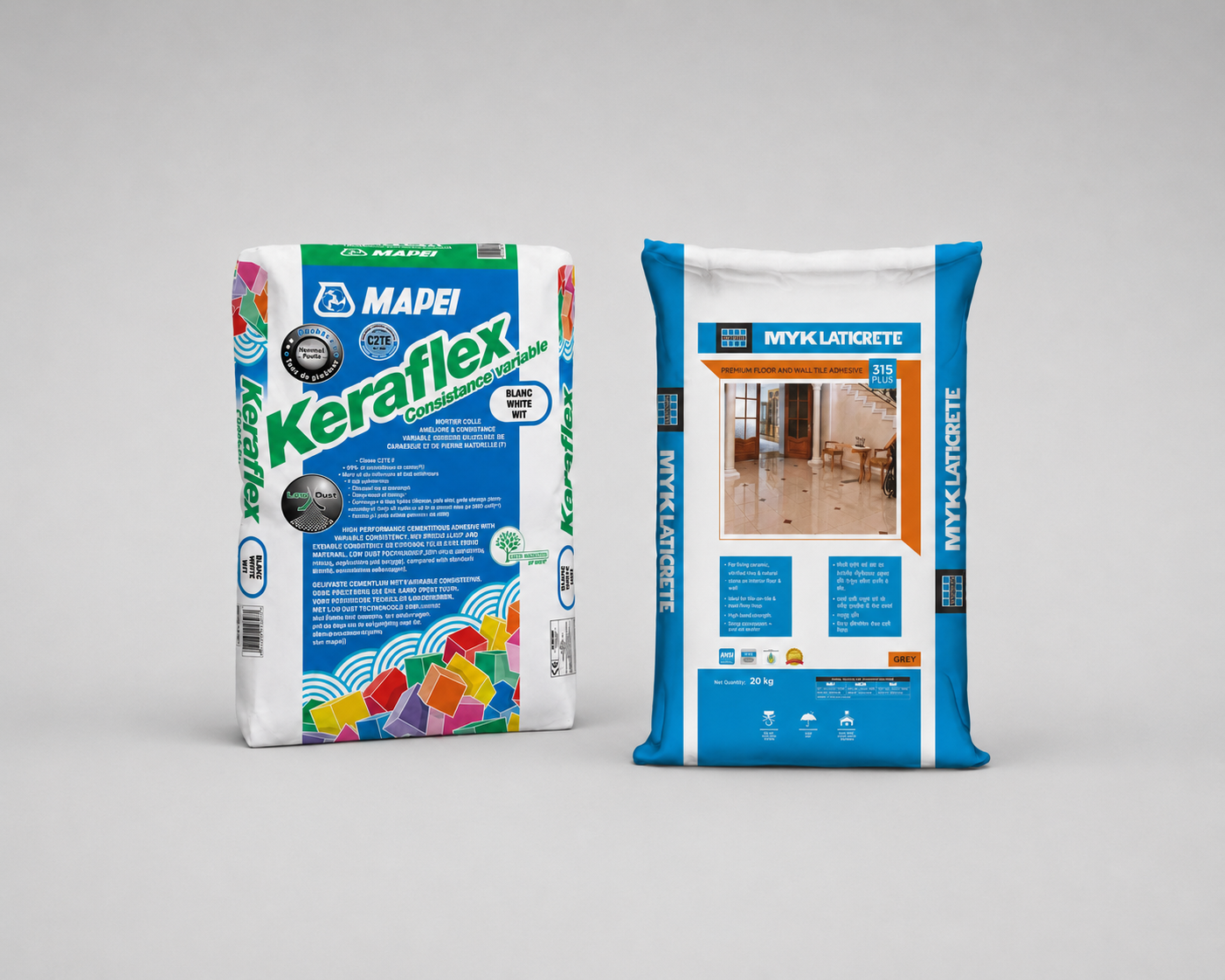
Epoxy
Floor & Wall
Wet Areas
High Bond
Tile & Stone
-
High bond strength Designed for durable adhesion on ceramic, vitrified, porcelain and other compatible finishes
-
Moisture & chemical resistance Epoxy systems are well suited to wet and demanding service environments
-
Project supply Contractor and bulk supply support across Kochi, Ernakulam and Thrissur
Typical specification
Actual properties vary by brand and grade. Final product selection should follow the tile type, substrate, service exposure and manufacturer’s technical data sheet.
Used for demanding tile and stone installations on compatible substrates.
Suitable grades can bond ceramic, vitrified and porcelain tiles.
Can be used with mosaics and compatible natural stone after suitability checks.
Useful for bathrooms, kitchens, wash areas and other wet environments.
Epoxy systems offer resistance to many common chemicals; grade selection matters.
Apply on a clean, sound and properly prepared substrate.
Pot life, open time and curing period vary by manufacturer and temperature.
Pack size, resin-hardener ratio and available colours are confirmed at quotation.
Selection tip: Share the tile type, tile size, substrate, application area and whether the location is wet, chemical-exposed or heavy-duty.
Common applications
Epoxy tile adhesive is commonly selected where strong bonding, low water absorption and resistance to demanding conditions are important.
Bathrooms & wet areas
Reliable tile fixing where frequent moisture exposure is expected.
Commercial kitchens
Suitable grades provide strong adhesion and resistance to wet cleaning conditions.
Hospitals & laboratories
Useful where hygienic finishes and resistance to cleaning chemicals are required.
Swimming pool areas
Selected epoxy systems can be used for compatible pool and water-contact tile installations.
Tile-on-tile renovation
Suitable products can bond new tiles over properly prepared existing tile surfaces.
Vitrified & porcelain tiles
Strong bonding for dense, low-absorption tile surfaces.
Industrial floors
Appropriate epoxy grades suit demanding floors exposed to traffic, moisture or chemicals.
Mosaics & decorative finishes
Provides durable fixing for compatible glass, ceramic and decorative mosaics.
Natural stone fixing
Can be used for compatible stone after checking staining, movement and manufacturer recommendations.
Durable high-performance bonding
Why choose epoxy tile adhesive?
For demanding installations, epoxy adhesive provides a dense, durable bond with excellent resistance to moisture and improved performance in many chemical-exposure environments.
Discuss your requirementHigh bond strength
Provides a strong, durable bond for dense and low-porosity tiles.
Moisture resistance
Well suited to wet areas and locations exposed to repeated washing.
Chemical resistance
Selected grades resist many cleaning agents, oils and service chemicals.
Durable fixing
Maintains dependable adhesion in demanding residential, commercial and industrial areas.
Low-porosity tile support
A practical option for vitrified, porcelain and other dense tile types.
Versatile applications
Suitable systems are available for floors, walls, renovations and specialised environments.
Product selection guidance
Choose the right epoxy adhesive for the job
Tell us whether you are fixing ceramic, vitrified, porcelain, mosaic or natural stone.
Share whether the base is concrete, cement screed, plaster, existing tile or another prepared surface.
Mention wet-area use, chemical exposure, traffic level and whether the installation is indoor or outdoor.
Frequently asked questions
Before you place an order
What is epoxy tile adhesive?
It is a resin-based, usually two-component adhesive system used for high-strength fixing of tiles and compatible stone.
How is epoxy adhesive different from cement-based tile adhesive?
Epoxy adhesive uses resin and hardener rather than cement chemistry and is commonly selected for stronger bonding, moisture resistance and demanding service conditions.
Can it be used for vitrified and porcelain tiles?
Yes. Suitable epoxy grades are commonly used for dense, low-absorption tiles such as vitrified and porcelain tiles.
Is epoxy tile adhesive suitable for wet areas?
Yes. Suitable products are widely used in bathrooms, wash areas, kitchens and other moisture-prone locations.
Can epoxy adhesive be used for tile-on-tile fixing?
Many epoxy systems can bond to properly prepared existing tiles, but the surface must be clean, sound and prepared according to the product instructions.
Can it be used for natural stone?
It can be used with compatible natural stone, but the specific stone should be checked for staining, sensitivity and manufacturer suitability.
How do I mix epoxy tile adhesive?
Mix the resin and hardener strictly in the manufacturer’s specified ratio until uniform. Do not alter the ratio or add water unless the product instructions specifically permit it.
How long can mixed epoxy adhesive be used?
The usable pot life depends on the product, quantity mixed and site temperature. Always follow the technical data sheet and mix only what can be applied within the stated working time.
How much epoxy adhesive will I need?
Coverage depends on tile size, substrate flatness, trowel notch, application method and product density. Share the area and tile size for quantity guidance.
When can the tiled area be used or grouted?
Initial curing and grouting times vary by product and temperature. Follow the manufacturer’s specified curing period before grouting, washing or loading the installation.